


FITBONE
FITBONE (Internal Method)

FITBONE is one of the most established internal limb lengthening systems in the world. Developed in Germany and used internationally for more than two decades, FITBONE is designed for patients seeking a precise, reliable, and fully internal limb lengthening surgery experience.
The FITBONE system utilizes a motorized intramedullary nail manufactured from medical-grade stainless steel and implanted inside the femur or tibia. Unlike external fixation methods, all major lengthening components remain inside the body, eliminating the need for an external fixator during the lengthening phase.
What makes FITBONE unique is its electronically controlled lengthening mechanism. The implant contains a miniature motor connected to a small receiver positioned beneath the skin. Using a portable external controller, the patient can activate the system according to the prescribed treatment plan. The motor gradually extends the nail in precise increments, allowing controlled bone distraction and stimulating natural new bone formation throughout the limb lengthening process.
The key to FITBONE technology is the communication between the implanted motorized nail, the subcutaneous receiver, and the external control unit. Signals are transmitted through the skin to activate the internal motor, enabling accurate and predictable lengthening without the need for external adjustment devices.
As a fully internal limb lengthening method, FITBONE offers a comfortable and convenient treatment experience while maintaining precise control over the lengthening process. It is commonly used for both femur lengthening and tibia lengthening procedures in patients undergoing height increase surgery or limb length discrepancy correction.
FITBONE remains one of the most recognized internal limb lengthening technologies worldwide and continues to be a trusted option for patients seeking a modern limb lengthening solution.
Materials of FITBONE Method
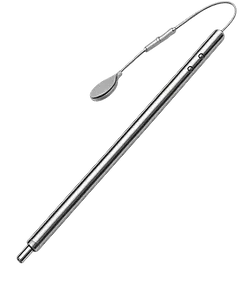
Fitbone Intramedullary Nail
The FITBONE® Intramedullary Limb Lengthening System consists of a motorized stainless steel limb lengthening nail designed for precise and controlled internal limb lengthening. Developed for both femur lengthening and tibia lengthening procedures, the FITBONE nail incorporates an internal electric motor that powers the lengthening mechanism from within the implant.
Manufactured from medical-grade stainless steel, the FITBONE nail is implanted inside the bone and remains completely internal throughout the limb lengthening process. Attached to the nail is a small receiver positioned beneath the skin, forming an integral part of the system. The motorized technology enables gradual and accurate distraction, supporting controlled bone regeneration during limb lengthening surgery.
FITBONE nails are available in 9 mm, 11 mm, and 13 mm diameters to accommodate different patient anatomies and intramedullary canal dimensions. The appropriate nail diameter is selected according to the patient's bone structure, canal size, and surgical plan. Thanks to its stainless steel construction and robust design, the FITBONE system offers a high weight-bearing capacity, providing enhanced stability throughout the recovery process.

Fitbone External Remote Controller (ERC)
The FITBONE External Remote Controller (Erc) is a portable, handheld device used to activate the lengthening mechanism of the FITBONE implant. Designed for ease of use, the controller allows the patient to perform the prescribed lengthening program at home according to the surgeon's instructions.
The FITBONE system utilizes an electronically controlled technology in which signals are transmitted from the external controller through the skin to a small receiver connected to the implanted nail. These signals activate the motor inside the FITBONE implant, enabling precise and controlled limb lengthening without the need for an external fixator.
The lengthening program is individually customized for each patient based on the treatment plan established by the surgeon. When necessary, the lengthening rate may be adjusted to optimize new bone formation and support a successful recovery process.
The FITBONE External Remote Control is designed to provide a convenient and user-friendly experience, allowing patients to carry out their daily lengthening routine safely and comfortably while maintaining precise control over the treatment process.
External View and Scars of FITBONE
Fitbone can be applied to the femur(thigh) bone or tibia(shin) bone, as with other methods. There is no external fixator. It is an internal method and there is no device outside the body.

Surgery in FITBONE Method
The surgeon and the medical team carefully plan the surgery based on detailed X-rays and a comprehensive physical examination performed before the operation. With extensive experience in limb lengthening and deformity correction, our surgeon performs FITBONE limb lengthening surgery using advanced surgical techniques and meticulous preoperative planning. The procedure is performed under general anesthesia and typically involves the following stages:
-
Administering general anesthesia
-
Preparing the intramedullary canal
-
Performing the osteotomy
-
Inserting the FITBONE intramedullary nail
-
Positioning the subcutaneous receiver
-
Securing the intramedullary nail to the bone with locking screws
-
Testing the FITBONE lengthening system
The surgery typically takes 2–3 hours, and a dedicated anesthesia team remains present throughout the entire procedure to ensure patient safety and comfort.
All incisions are performed using minimally invasive techniques whenever possible. Throughout the operation, real-time X-ray imaging is used to verify accurate implant positioning and proper alignment. Before completing the procedure, the FITBONE system is thoroughly tested to confirm that the implant, receiver, and lengthening mechanism are functioning correctly. Once all surgical objectives have been achieved, the incisions are closed with aesthetic sutures, completing the operation.
Hospitalization after Limb Lengthening Surgery with FITBONE Method
Hospitalization Time: 5-7 Days
-
Benefit from a comfortable and monitored recovery period with an extended stay of 5-7 days.
Medication Regimen:
-
Receive personalized care with essential medications including serum, vitamin-mineral supplements, blood thinners, painkillers, and antibiotics.
Dedicated Caregiver Support:
-
Experience around-the-clock assistance from AFA caregivers, ensuring continuous support and comfort throughout your recovery journey.
Positioning and Splinting:
-
Our skilled nurses and physiotherapists focus on reducing post-surgery edema and preventing contractures through expert positioning. Special dorsiflexion splints are employed to counter plantar flexion contractures, especially following tibia surgeries.
Surgeon Check-ups:
-
Benefit from meticulous monitoring as our surgeon and their team conduct check-ups twice a day, ensuring your progress aligns with the expected trajectory.
Early Walking Training:
-
Initiate your walking training just 24 hours after surgery, guided by our surgeon. Utilize a walker for assistance during this initial walking phase.
Regular Dressing Changes:
-
Experience hygienic care with pin and incision dressings performed every 2-3 days, promoting optimal healing.
Physiotherapy Sessions:
-
Engage in daily physiotherapy sessions, tailored to your well-being and blood levels. Our physiotherapist focuses on stretching, strengthening, mobilization, and walking exercises.
Continuous Passive Motion (CPM):
-
Embrace joint restoration and reduced edema with the implementation of a Continuous Passive Motion (CPM) device. Applied at a tolerable level post-surgery, gradual angle increases enhance joint motion.
Initial Lengthening Phase:
-
Enter the initial lengthening phase on the 7th day, following the surgeon’s assessment of controlled callus formation. Surgeon-guided extensions commence, with patients educated on the process for a collaborative recovery journey.
Embark on your limb lengthening recovery with confidence, supported by our specialized care program tailored to your individual needs.

Our patients, whose hospitalization period is over, are taken out of the hospital and transferred to the AFA Limb Lengthening Center. During the lengthening period, they stay here for approximately 2-3 months. AFA Limb Lengthening center, physical therapy center, hydrotherapy pool are located in the same building. AFA medical team and patient consultants are located at the building and meet all the needs of the patients.
Lengthening Process In FITBONE Method
In the FITBONE system, the patient utilizes the External Control Set (ECS) for the lengthening process. The handheld controller is placed over the area where the receiver is positioned beneath the skin, allowing the internal motorized nail to be activated safely and comfortably. Our surgeons and rehabilitation team program the FITBONE system according to the patient's treatment plan and provide detailed training on how to perform the lengthening procedure.
Most patients perform several lengthening sessions throughout the day, following a customized schedule prescribed by the surgeon. In general, the lengthening process progresses at an average rate of approximately 1 mm per day, although the distraction rate may be adjusted based on bone regeneration, X-ray findings, and individual soft tissue healing response.
After limb lengthening surgery using the FITBONE method, the rehabilitation process becomes one of the most important factors influencing a successful outcome. At AFA Limb Lengthening, patients participate in a comprehensive physiotherapy and rehabilitation program conducted five days per week under the supervision of our experienced physiotherapists.
Our rehabilitation program is specifically designed for FITBONE patients and includes stretching exercises, muscle strengthening, joint mobilization, Pilates-based training, balance exercises, gait training, electrotherapy, and therapeutic massage. The primary goals of physiotherapy are to maintain joint mobility, preserve muscle flexibility and strength, improve walking function, and support a safe and effective limb lengthening recovery process.
Throughout the treatment period, our physiotherapists work closely with the surgeon to monitor the patient's progress. Weekly clinical evaluations and regular X-ray assessments are used to track bone regeneration, functional recovery, and overall progress. Based on these findings, the rehabilitation program may be adjusted to meet the individual needs of each patient and optimize recovery outcomes.


Hydrotherapy is an important component of the rehabilitation process following FITBONE limb lengthening surgery. The buoyancy of water reduces the load placed on the joints, muscles, and soft tissues, allowing patients to perform therapeutic exercises more comfortably and safely during recovery.
During the limb lengthening process, patients may experience soft tissue tightness involving the muscles, tendons, fascia, and nerves, as well as swelling, gait disturbances, balance deficits, pain, and reduced joint mobility. Hydrotherapy provides a low-impact environment that helps minimize these challenges while supporting movement, flexibility, strength, and functional recovery.
At AFA Limb Lengthening, hydrotherapy is incorporated into the rehabilitation program when appropriate to help maintain mobility, improve walking mechanics, reduce discomfort, and support a successful limb lengthening recovery. Combined with physiotherapy and regular clinical follow-up, hydrotherapy can play a valuable role in optimizing recovery outcomes following FITBONE surgery.
Walking In FITBONE Method
Although the FITBONE system offers a higher weight-bearing capacity than many internal limb lengthening nails, patients are generally advised to use a walker or crutches during both the lengthening and consolidation phases. While the implant provides mechanical support, the newly forming regenerate bone requires time to mature and gain sufficient strength.
At AFA Limb Lengthening, our physiotherapists carefully instruct patients on safe walking techniques using a walker or crutches. During the lengthening phase, patients typically follow a partial weight-bearing protocol to protect both the implant and the regenerate bone. The appropriate level of weight-bearing is determined by the surgeon and adjusted according to the patient's progress and radiographic findings.
During the consolidation phase, weight-bearing may gradually be increased as new bone formation continues and the regenerate bone becomes stronger. However, patients are usually advised to continue using a walker or crutches until sufficient bone healing and consolidation have been confirmed on X-rays. Once adequate bone strength has been achieved, patients can safely transition to full weight-bearing walking and progressively return to normal daily activities.
It is very important to follow the patient closely during the extension period. Quality of the lengthening, check of callus(new bone) tissue, examination of pin and wire locations, examination of physical condition, examination of complications are necessary. Our surgeon closely monitors the condition of our patients on a weekly basis. He comes once a week or every other week to check the patients’ x-rays, complications and physical condition.

Consolidation Period In FITBONE Method
The consolidation phase is the period during which the newly formed regenerate bone gradually hardens and matures. During this stage, the quality and strength of the new bone continue to improve until full bone healing is achieved. Although the FITBONE system offers a higher weight-bearing capacity than many internal limb lengthening nails, patients must still follow their surgeon's weight-bearing recommendations to protect the regenerate bone during the healing process.
Until sufficient bone consolidation has occurred, patients are typically required to walk with the assistance of a walker or crutches. The progression toward full weight-bearing depends primarily on the quality and rate of new bone formation, which is monitored through regular clinical evaluations and X-rays. As the regenerate bone becomes stronger and more mature, weight-bearing can gradually be increased according to the surgeon's recommendations.
Once adequate bone healing has been achieved, patients can transition to full weight-bearing walking. This milestone often accelerates functional recovery, improves mobility, and helps patients return to normal daily activities. As the muscles, joints, and other soft tissues adapt to the new bone length and balance improves, patients gradually regain their preoperative physical capacity and confidence.
After bone healing has been completed and the regenerate bone has become sufficiently dense and consolidated, the bone is able to tolerate full weight-bearing activities. At this stage, the FITBONE implant can be removed if recommended by the surgeon. Implant removal is typically considered approximately 1–1.5 years after the initial surgery, depending on the patient's bone healing and overall recovery progress. The decision to proceed with implant removal is made by our surgeon after evaluating the patient's clinical condition and X-ray findings.
Surgery stages:
⦁ General anesthesia
⦁ Small incisions to access the FITBONE implant and receiver
⦁ Removal of the proximal and distal locking screws
⦁ Removal of the FITBONE intramedullary nail
⦁ Removal of the subcutaneous receiver
⦁ Closure of all incisions with aesthetic sutures
Postoperative hospital stay is usually 1 day. Since bone healing has already been completed before implant removal, patients are generally able to walk with full weight-bearing immediately after surgery. Once the FITBONE implant and receiver have been removed, the treatment process is considered complete.

The Advantages and Disadvantages of the FITBONE Method
The FITBONE method is one of the most established internal limb lengthening systems available today. Utilizing a fully implantable motorized intramedullary nail, FITBONE eliminates the need for an external fixator during the lengthening process and offers a modern approach to limb lengthening surgery. Like all limb lengthening methods, FITBONE has its own advantages and limitations. Understanding these factors can help patients make a more informed decision when choosing the most appropriate limb lengthening method for their individual goals and circumstances.
Advantages
-
Less Invasive and Less Traumatic Surgery: As a fully internal limb lengthening method, FITBONE minimizes soft tissue disruption and eliminates the need for external fixation devices, contributing to a more comfortable recovery process.
-
More Comfortable: Since the FITBONE system does not involve external fixators, patients experience significantly less discomfort during the lengthening process.
-
Low Infection Risk: Unlike external fixation methods, which have open pins that can introduce infections, the internal system minimizes the risk of infection.
-
Less Scarring: The internal nail results in fewer and smaller surgical scars compared to external fixators, leading to better cosmetic outcomes.
-
Less Pain: Patients typically report lower pain levels due to the absence of external components and a more controlled lengthening process.
-
Higher Weight-Bearing Capacity: Due to its robust stainless steel construction and larger nail diameters, the FITBONE system offers a higher weight-bearing capacity than many internal limb lengthening systems. This increased load-bearing capability may provide additional stability during the recovery and rehabilitation process and can be advantageous for selected patients based on their individual characteristics and treatment plan.
-
No Fixator Removal Surgery: Traditional external fixators require a second surgery for removal, whereas the FITBONE method only involves a single surgical procedure.
-
Hydrotherapy: Patients can safely engage in hydrotherapy, which aids in recovery by improving mobility, reducing pain, and strengthening muscles.
-
Accurate and Comfortable Lengthening: The system provides smooth and reliable lengthening with minimal complications.
Disadvantages
-
High Cost: The FITBONE Method is expensive, making it less accessible to some patients.
-
Use of Walking Aids During Lengthening Period: Patients are generally required to use a walker or crutches until sufficient bone healing has occurred and the surgeon determines that increased weight-bearing is safe.
Get in Touch
Get customized answers to your questions. Contact us via WhatsApp, email, or by filling out our contact form to schedule your personalized consultation.